


Removing, Storing and Using Carbon
REMOVING PROCESSES
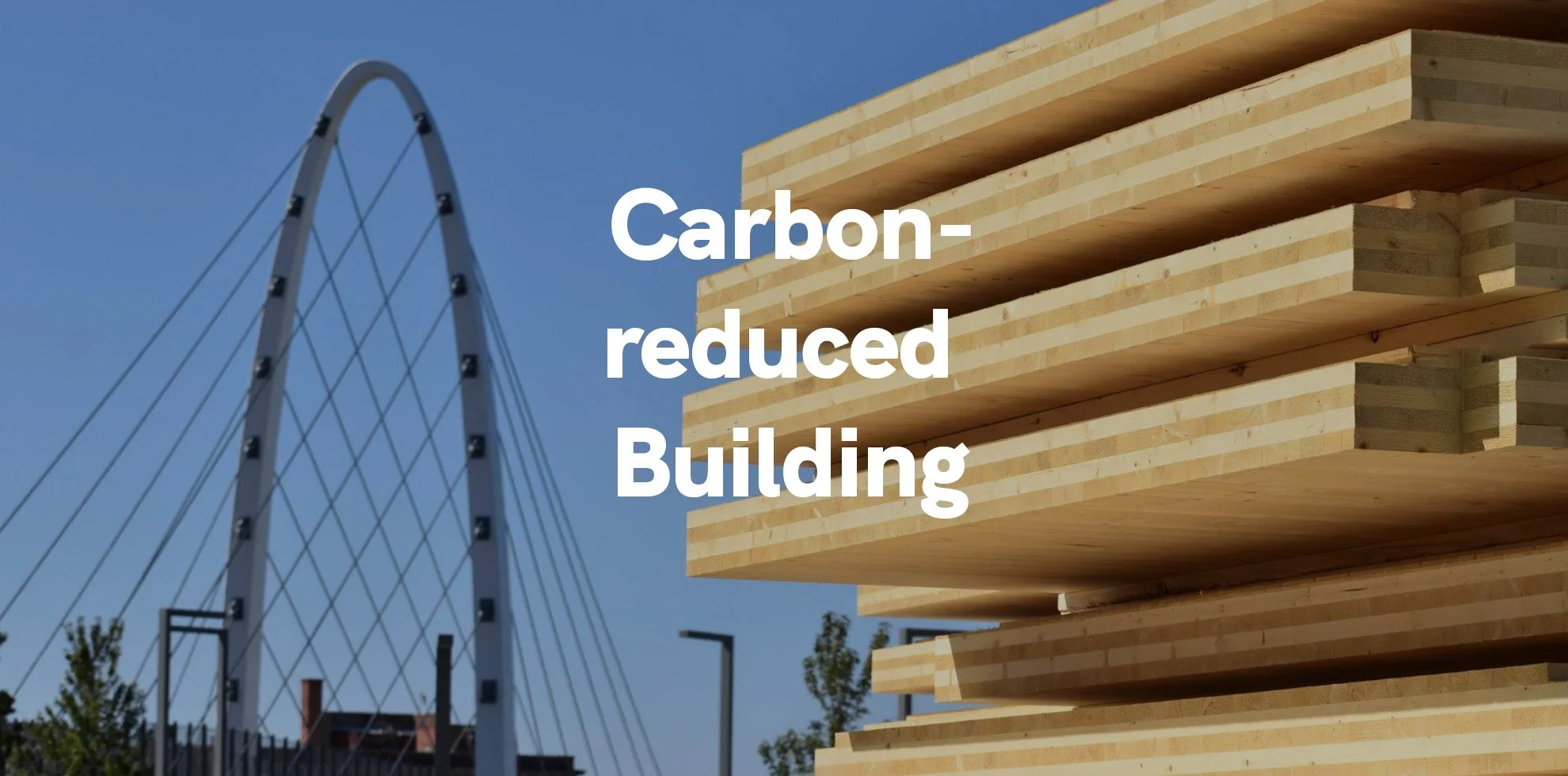
TRIVERRA pursues both natural and technical methods to absorb CO₂ from the air. These natural methods include the reforestation of areas as part of our Rainforest Conservation Projects. For its data center buildings, TRIVERRA largely uses durable mass timber construction with wood from sustainably managed forests, which absorb CO₂ from the air as they grow. With Direct Air Capture in data center projects, TRIVERRA is developing a technical solution that enables the permanent storage or use of absorbed CO₂.
STORAGE APPLICATIONS
When it comes to CO₂ storage, TRIVERRA pursues various measures depending on the location. For example, the CO₂ captured through Direct Air Capture at the Rhineland project can be stored in basalt. In the Rainforest Conservation Projects, the preservation and sustainable management of forests and soils ensures the permanent storage of large amounts of CO₂. The use of durable mass timber construction for data center buildings captures CO₂ in the timber modules for generations.
USE APPLICATIONS
The potential for using absorbed CO₂ is expanding into increasingly broader areas of application. Depending on the location, TRIVERRA plans to use CO₂ as fertilizer for purpose-built greenhouses. These greenhouses can significantly increase crop yields with CO₂-enriched air and utilize approximately 10,000 tons of CO₂ per year for a 20-hectare greenhouse. Furthermore, the availability of CO₂ for industrial applications is being examined on a site-specific basis.
Carbon Capture using Data Centers
Example technology of Direct Air Capture
Beyond the avoidance and reduction of emissions of our Data Center and BESS projects by applying our Core Set of Tools, we develop in collaboration with our partner Holder and experts in this field a CO₂ Direct Air Capture (DAC) technology to realize negative greenhouse gas emissions. The goal of this DAC technology is to utilize the air-based cooling process of data centers to absorb CO₂ from the ambient air. In data centers, air intake is a significant expense anyway, so CO₂ capture is dynamically achieved during the process of air intake required for cooling data centers. This will allow capturing carbon at significantly lower cost than standalone DAC, thus making the technology commercially viable.
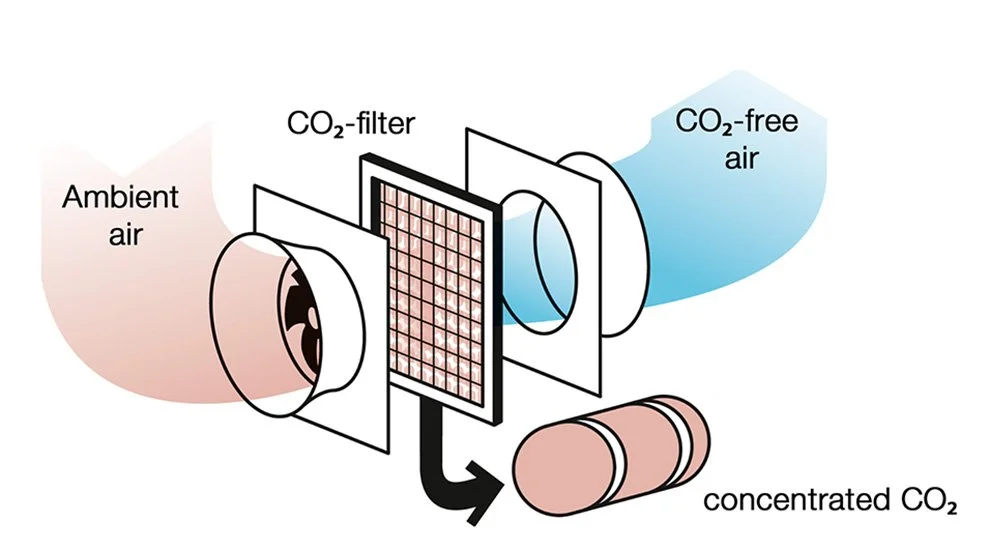
Drawing of Direct Air Capture in ventilation duct
How we use carbon
CARBON SEQUESTRATION
BASALT AS A CO₂ SINK
Basalt formations are considered a potential method for large-scale carbon sequestration. A key project exploring this topic is carbon capture and storage (CCS) in basalt formations. When CO₂ is injected into basalt-rich rock, it reacts with the minerals in the basalt and forms stable carbonates over time. This process could contribute to mitigating climate change by sequestering CO₂ deep underground. We plan to implement this method in our data center project in the Rhineland Region.
DIRECT CARBON USE
CO₂ AS FERTILIZER
In greenhouses, the addition of more CO₂ (CO₂ fertilization) increases plant photosynthesis and thus yield. Greenhouses are therefore an ideal user of captured CO₂. With its Magdeburg data center project, TRIVERRA envisions a greenhouse of up to 40 hectares in size, which could, for example, produce up to 16,000 tons of tomatoes with 20,000 tons of CO₂ annually. The additional use of the data center's waste heat to heat the greenhouse would also save up to 30,000 tons of CO₂ equivalents per year.
SUPPLY FOR INDUSTRIAL USE

CO₂ for direct and indirect use
The application of absorbed CO₂ from the air is progressing. For example, CO₂ has long been used in the beverage industry, as well as in refrigerators and fire extinguishers. CO₂ can be used as a chemical raw material in methanol production, chemical synthesis, and even in the production of sustainable aviation fuel. The CO₂ recovered from direct air capture, if it cannot be consumed directly on-site, will be made available to industry. New options for CO₂ delivery are emerging, such as OGE's CO₂ distribution network.
Rainforest Conservation Projects
Nature-based Projects
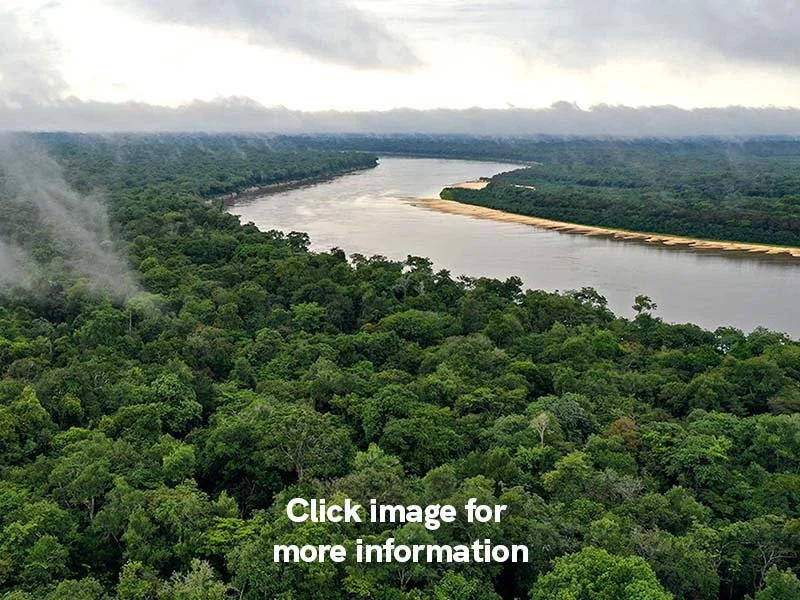
We initiate and implement large-scale nature-based Rainforest Conservation Projects with partners under the United Nations REDD+ framework to protect, regenerate, and sustainably manage the Earth's priceless forest areas in collaboration with local communities. This reduces emissions from deforestation and forest degradation and achieves measurable biodiversity gains and CO₂ capture through reforestation. Furthermore, we promote the climate resilience of important forest stands and support the livelihoods of local communities.
The development and operation of data center, BESS projects, and other infrastructure contribute to greenhouse gas emissions. Beyond its Core Set of Tools, TRIVERRA takes significant measures in its approach to prevent or minimize emissions. However, unavoidable emissions are offset by high-quality biodiversity certificates from TRIVERRA’s own rainforest conservation projects, ensuring the development of data centers and BESS projects in a climate- and resource-friendly manner. With our project in Brazil already in development, we currently explore a project in Indonesia.
Unavoidable emissions
Looking for carbon units?
TRIVERRA's rainforest conservation project in the Amazon in Brazil covers an area of approximately 1.3 million hectares, roughly five times the size of Luxembourg. With an annual emission reduction of approximately 26 million tons of CO₂ equivalent. Hence, high-quality and high-integrity carbon units and biodiversity certificates are already available for pre-sale. Contact us, and we will be happy to develop an offer tailored to your needs, based on transparency, measurability, and impact.
Let’s Work Together
Together we can achieve more! TRIVERRA is open to many forms of collaboration in the development of technical and nature-based carbon solutions.